
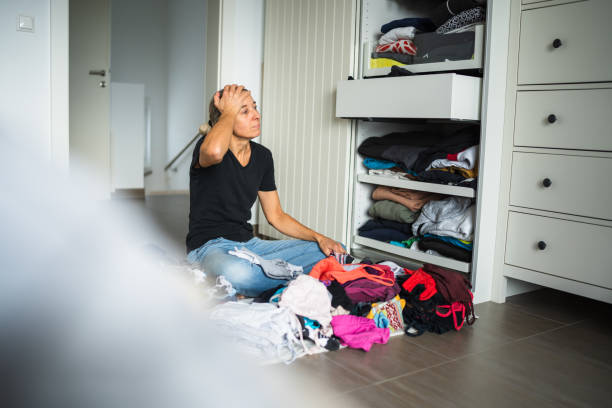
And not in the cute, Pinterest-quote kind of way. I mean the why-am-I-doing-everything-and-how-did-this-happen kind of way.
My kids were 12 and 13 years old when I found myself sitting on the floor of my closet, crying. Not a dramatic movie cry—more of a quiet, exhausted, surrounded-by-hanging-jeans cry. I was one person, carrying the workload of an entire household, and suddenly it hit me: this was completely my fault.
How could I be upset with two almost grown humans when I had trained them perfectly to believe that Mom was the Household Fairy?
I had done everything for them.
I washed their laundry.
I made their plates.
I picked up their plates.
I washed the dishes.
I cleaned their rooms. (Yes, plural. Yes, repeatedly.)
So of course they weren’t doing anything for themselves. In their minds, this wasn’t neglect—it was tradition.
“That’s Mom’s job. That’s what she’s always done.”
Sitting there in my closet, I made a deal with myself: I wasn’t leaving until I came up with a solution. Because while I thought I was helping, I was actually doing them zero favors. These kids were growing into young adults right before my eyes, and adulthood does not come with a live-in mom who magically resets your life every night.
So I changed things. Slowly. Imperfectly. With resistance.
And here’s what actually worked.
My Real-Life Tips for Teaching Teenagers Responsibility
(From a Mom Who Learned the Hard Way)
1. Tie Responsibility to Freedom
Teenagers are not motivated by lectures. They are motivated by freedom.
Instead of threatening consequences, I started connecting actions to outcomes.
“If homework and chores are done, I’m comfortable with you going out.”
No yelling. No power struggles. Just cause and effect—like real life, but with fewer taxes.
2. Give Them Ownership (Then Back Away Slowly)
There’s a difference between helping and owning.
They don’t “help with laundry.”
They do their laundry.
Will clothes get washed incorrectly? Yes.
Will socks disappear? Absolutely.
Will they survive? Miraculously, also yes.
Safe mistakes are some of the best teachers.
3. Be Clear—Not a Broken Record
Teens have an incredible ability to tune out nagging.
Say expectations once.
Write them down if needed.
Follow through.
Repeating yourself 47 times only trains them to wait until time #48.
4. Let Natural Consequences Do the Talking
This one changed everything.
Didn’t charge your phone? Dead phone at school.
Missed an assignment? Email the teacher yourself.
No rescuing. No “I told you so.” Just quiet observation while life teaches the lesson.
5. Teach Planning, Not Just Responsibility
Responsibility isn’t instinctive—it’s learned.
Help them break tasks into steps.
Show them how to use reminders, alarms, and calendars.
Ask, “What’s your plan to get this done?”
Because “I’ll remember” is not a plan. It’s a wish.
6. Model the Behavior You Want to See
They’re watching. Always.
When I mess up, I say it out loud.
I explain how I fix it.
I keep my commitments.
Nothing humbles a teen faster than realizing their parent practices what they preach.
7. Assign Responsibilities That Actually Matter
Responsibility sticks when it’s meaningful.
Managing money.
Communicating with school.
Making appointments.
Cooking meals.
Helping with siblings.
Figuring out transportation.
Real life skills > busy work.
8. Praise Effort, Not Perfection
Progress deserves recognition.
“I noticed you started your homework without being asked.”
“You handled that better than last time.”
This builds confidence—and motivation that doesn’t depend on you clapping every time.
9. Choose Your Battles Wisely
Not everything needs correction.
Focus on safety, respect, and long-term skills.
Let the minor stuff go.
Peace in the house is sometimes more valuable than winning the argument.
10. Put the Relationship First
Responsibility grows best in a respectful environment.
Listen before correcting.
Collaborate instead of command.
Ask, “How can we make this work better?”
Because at the end of the day, the goal isn’t control—it’s raising capable humans who still want to talk to you.
Final Thoughts from a Former Closet Crier
Teaching responsibility is messy. It’s uncomfortable. And it often starts with realizing we need to change first.
But watching your teenagers step up—even imperfectly—is worth every sock left inside-out and every deep breath you take instead of fixing it for them.
And if you ever find yourself crying in your closet, just know—you’re not alone.
You’re just in the middle of raising future adults ❤️